
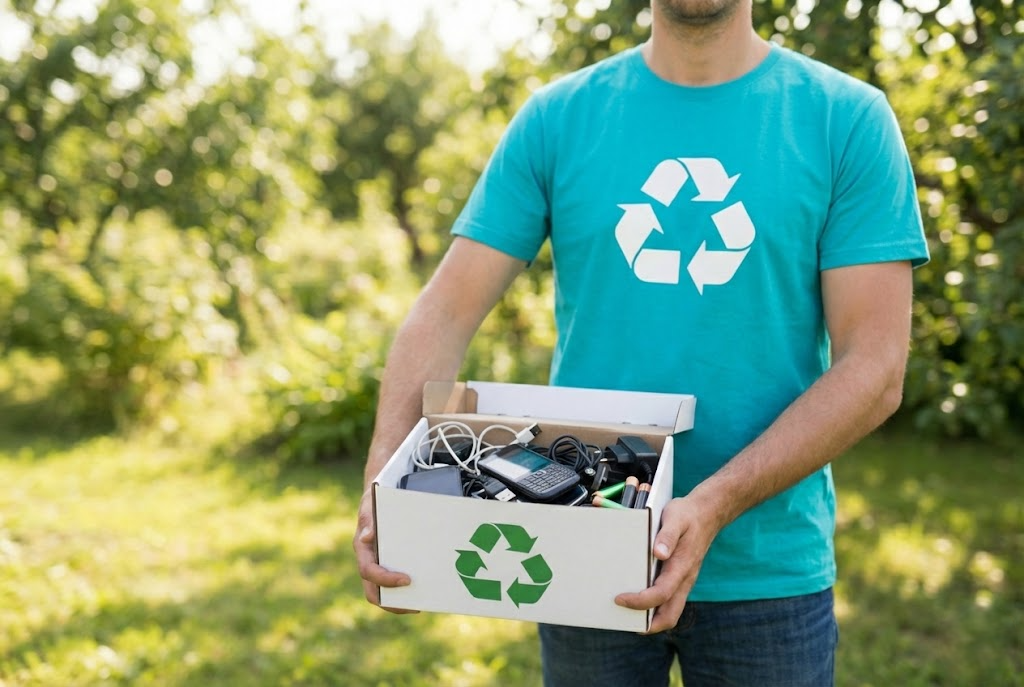
Batteries power just about everything now remote controls, laptops, electric equipment, backup systems, and industrial machinery. But once they're dead, they don't belong in the regular trash. Lithium-ion and other high-energy batteries in particular can pose real fire, chemical, and environmental risks if they end up in the wrong waste stream.
For homes, offices, and industrial sites across Dubai, a proper battery disposal service means used batteries get collected, handled, transported, and recycled the right way. Earthify supports this across all three residential, commercial, and industrial waste streams helping customers deal with end-of-life batteries more sustainably.
Why Battery Disposal Actually Matters Here
Used batteries hold recoverable materials, but they also contain substances that need careful handling. A punctured, overheated, or poorly stored battery is a hazard not just an inconvenience.
Dubai's waste-management framework has been tightening around segregation, collection, transport, treatment, and recycling, and Dubai Municipality has published its own technical guidance specifically for battery recycling. The upshot: batteries shouldn't get mixed in with general waste. There are proper channels for this, and using them cuts down on environmental impact while recovering materials that would otherwise go to waste.
1) Households
Batteries pile up at home faster than most people notice remotes, toys, cameras, laptops, power banks, small appliances. A few loose batteries seem harmless, but in volume, tossing them in with regular rubbish creates unnecessary risk.
Keep used batteries separate from household waste, and don't store damaged or leaking ones near anything else. Crushing, puncturing, or burning batteries at home is a bad idea without the right equipment.
Earthify helps households route unwanted batteries toward proper recycling and disposal channels as part of its broader home and business recycling services.
2) Offices
Offices generate battery waste too laptops, wireless accessories, UPS systems, emergency equipment, telecom gear especially during IT upgrades or a move. Chucking these in the office bin isn't a real strategy.
A better approach: set up a dedicated collection point and arrange periodic pickups through a recycling provider. Earthify folds battery disposal into its broader e-waste and IT asset disposal work for businesses. For companies dealing with larger volumes, keeping records of waste types, quantities, and disposal destinations also makes the whole process easier to track and report on.
3) Industrial Sites
Industrial battery waste is a different scale entirely backup power systems, telecom infrastructure, machinery, energy storage. It demands more rigor around segregation, storage, transport, and safety.
Dubai's 2026 implementing regulations now cover waste records, authorized disposal locations, transportation rules, hazardous-waste containers, and technical standards for exactly this kind of waste. Working with an experienced recycling partner takes a lot of that burden off industrial teams. Earthify's end-to-end solutions are built around controlled collection, processing, compliance, and reporting.
What Counts as Battery Waste
• Lithium-ion batteries
• Laptop and mobile-device batteries
• Power-bank batteries
• UPS batteries
• Lead-acid batteries
• Rechargeable batteries
• Industrial batteries
• Batteries from electronic equipment
• Mixed battery waste
Different chemistries and conditions call for different handling another reason batteries shouldn't get lumped in with ordinary municipal waste. Dubai Municipality's guidance covers this directly, alongside its rules for waste collection, transport, and electrical/electronic equipment recycling.
How the Process Works
It starts with collection and segregation batteries get identified and pulled out of the general waste stream to cut down on handling risk. From there, they're moved using proper procedures, and where required, suitable containers and authorized transport.
Once collected, batteries go to appropriate treatment and recycling channels. Materials that can be recovered get processed for reuse; what can't be recycled is handled through suitable disposal methods. Earthify's process, put simply, is clean collection, safe movement, and processing through authorized recycling channels.
The Payoff of Doing It Properly
• Safety - proper handling cuts the risk from damaged or poorly stored batteries
• Environmental protection - recycling keeps harmful waste out of the wrong streams
• Material recovery - recycling supports circular-economy practices by recovering usable materials
• Cleaner waste management - batteries become a separate, controlled stream instead of a mixed-in problem
• Compliance - using proper channels helps organizations stay aligned with current requirements
Dubai's waste-management law leans hard into recycling, resource efficiency, and diverting waste from landfills this is very much part of that push.
Why Earthify
Earthify's focus is responsible recycling and waste management for homes and businesses, with battery disposal sitting alongside its e-waste recycling, IT asset disposal, and specialized waste recycling services. The emphasis throughout is on secure handling and processing through authorized channels, not just handing batteries off and hoping for the best.
For businesses juggling multiple waste categories, Earthify can also handle battery waste as part of a wider recycling strategy rather than treating it as a one-off problem.
The Bottom Line
Whether it's a drawer full of dead AAs at home, an office clearing out old laptops, or an industrial site managing large battery inventories, separating batteries from regular waste and routing them through the right channels is worth the extra step. Earthify's battery disposal support in Dubai gives homes, offices, and industries a straightforward way to do that, contributing to safer waste management and Dubai's push toward a more circular, resource-efficient economy.